Property Financial Reporting Guide for Kenyan Landlords (2026)
A 2026 guide to property financial reporting in Kenya, covering rent records, M-Pesa reconciliation, expenses, receipts, and KRA-ready summaries.
Key Takeaways
- Introduction: Why Most Landlords Fail at Financial Management
- The Real Cost of Poor Financial Management
- Understanding Property Financial Statements
- Setting Up Your Property Accounting System
Published: November 30, 2024 Updated: July 3, 2026 Reading Time: 11 minutes Keywords: Property accounting Kenya, landlord financial reporting, rental property finances, KRA tax compliance
Introduction: Why Most Landlords Fail at Financial Management
Uncomfortable truth: Many Kenyan landlords have no idea if their properties are actually profitable.
They see rent coming in and think "I'm making money." But when tax season arrives or they need a loan, they scramble to piece together months of transactions from M-Pesa statements, bank records, and crumpled receipts.
The result?
- Overpaying KRA by 20-40% (or worse, underpaying and facing penalties)
- Missing out on legitimate tax deductions
- Unable to secure financing for property expansion
- No clear picture of property performance
- Difficulty making data-driven investment decisions
This 2026 guide shows you how to set up property financial reporting around rent records, M-Pesa reconciliation, expenses, receipts, and KRA-ready summaries.
2026 refresh note: This article now separates practical bookkeeping workflows from generic accounting advice and highlights the records landlords need inside a property management system.
The Real Cost of Poor Financial Management
Enjoying this article? Get more like it.
Free landlord tips + M-Pesa rent collection guides, every 2 weeks.
Case Study: James, 8 Units in Kitengela
Before proper financial tracking:
- Thinks he's profitable ("rent is coming in!")
- No expense tracking beyond rent collection
- Files taxes based on estimates
- Can't get bank loan for expansion
- Stressful tax season every year
After implementing systems:
- Discovers actual profit margin is 45%, not "guessed" 70%
- Identifies KES 120,000 in missed deductions
- Reduces tax bill by KES 78,000 legally
- Gets bank loan approved (proper books)
- Makes decisions based on data
Annual impact: Significant savings + loan approval for expansion
Understanding Property Financial Statements
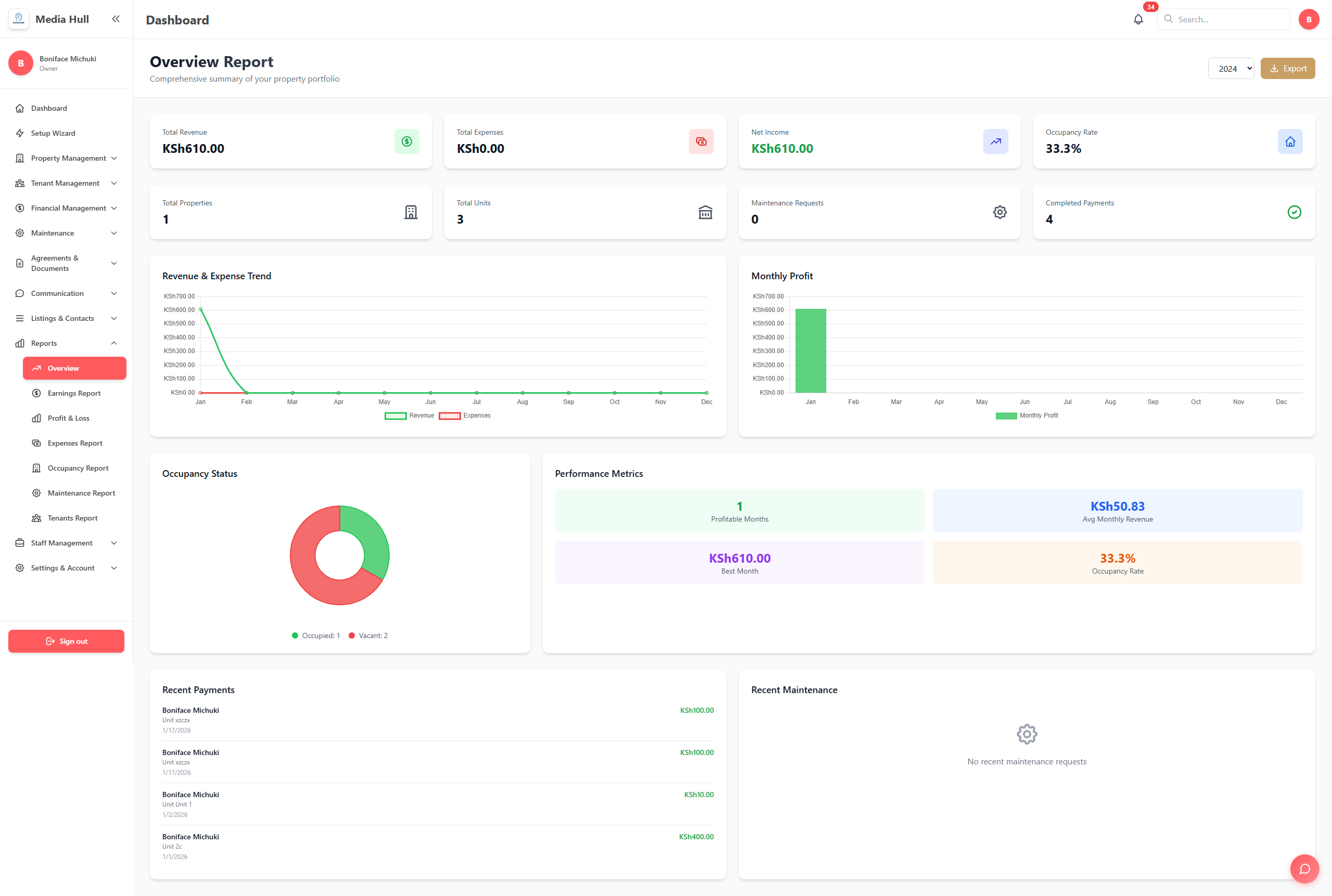
The 3 Essential Financial Reports Every Landlord Needs
1. Income Statement (Profit & Loss)
Shows: Revenue - Expenses = Net Profit
Sample monthly income statement:
INCOME STATEMENT - JUNE 2026
ABC Apartments, Nairobi

INCOME
Rental Income                 KES 420,000
Late Payment Fees              KES  12,000
Other Income                   KES   5,000
------------------------------------------
TOTAL INCOME                  KES 437,000

EXPENSES
Mortgage/Loan Payment         KES 150,000
Property Management Fees       KES  21,000
Repairs & Maintenance          KES  35,000
Utilities                      KES  18,000
Insurance                      KES   8,000
Property Taxes                 KES  12,000
Cleaning Services              KES   6,000
Security                       KES  15,000
Software/Tools                 KES   5,000
Miscellaneous                  KES   3,000
------------------------------------------
TOTAL EXPENSES                KES 273,000

NET OPERATING INCOME          KES 164,000

Profit Margin: 37.5%
What it tells you:
- Are you profitable?
- What's your profit margin?
- Where is money going?
- Which months perform best?
2. Cash Flow Statement
Shows: Money actually moving in and out
Why it matters: You can be "profitable" on paper but broke in reality.
Sample cash flow statement:
CASH FLOW STATEMENT - JUNE 2026

CASH FROM OPERATIONS
Rent Collected                KES 385,000
Late Fees Collected            KES  12,000
Other Income                   KES   5,000
Expenses Paid                 (KES 273,000)
------------------------------------------
NET CASH FROM OPERATIONS      KES 129,000

CASH FROM INVESTING
Property Improvements         (KES  80,000)
Equipment Purchase            (KES  15,000)
------------------------------------------
NET CASH FROM INVESTING       (KES  95,000)

CASH FROM FINANCING
Loan Received                  KES       0
Loan Payment                  (KES 150,000)
Owner Withdrawals             (KES  50,000)
------------------------------------------
NET CASH FROM FINANCING       (KES 200,000)

NET CASH FLOW                 (KES 166,000)

Opening Cash Balance           KES 450,000
Closing Cash Balance           KES 284,000
Key insight: Property is profitable (KES 164K) but cash decreased (KES 166K) due to loan payments and improvements.
3. Balance Sheet
Shows: Assets, Liabilities, Equity
Sample balance sheet:
BALANCE SHEET - JUNE 30, 2026

ASSETS
Current Assets:
  Cash                         KES  284,000
  Rent Receivable              KES   52,000
  Security Deposits Held       KES  280,000
------------------------------------------
Total Current Assets           KES  616,000

Fixed Assets:
  Property Value               KES 12,000,000
  Equipment                    KES    150,000
  Less: Depreciation          (KES    300,000)
------------------------------------------
Total Fixed Assets             KES 11,850,000

TOTAL ASSETS                   KES 12,466,000

LIABILITIES
Current Liabilities:
  Accounts Payable             KES   25,000
  Tenant Deposits              KES  280,000
------------------------------------------
Total Current Liabilities      KES  305,000

Long-term Liabilities:
  Mortgage/Loan                KES 4,500,000
------------------------------------------
Total Liabilities              KES 4,805,000

EQUITY
  Owner's Investment           KES 6,000,000
  Retained Earnings            KES 1,661,000
------------------------------------------
Total Equity                   KES 7,661,000

TOTAL LIABILITIES + EQUITY     KES 12,466,000
What it tells you:
- Total property value
- How much you owe
- Your actual equity
- Financial health
Setting Up Your Property Accounting System
Step 1: Choose Your Accounting Method
Cash Basis Accounting
- Record income when received
- Record expenses when paid
- Simpler for small landlords
- Most common in Kenya
Accrual Basis Accounting
- Record income when earned (even if not received)
- Record expenses when incurred
- More accurate picture
- Required for larger operations
Recommendation: Cash basis for under 10 units, accrual for larger portfolios.
Step 2: Set Up Your Chart of Accounts
Income Accounts:
- 4000: Rental Income
- 4100: Late Payment Fees
- 4200: Lease Termination Fees
- 4300: Other Income
Expense Accounts:
- 5000: Mortgage/Loan Payments
- 5100: Property Management Fees
- 5200: Repairs & Maintenance
- 5300: Utilities
- 5301: Water
- 5302: Electricity (common areas)
- 5303: Internet
- 5400: Insurance
- 5500: Property Taxes
- 5600: Cleaning & Janitorial
- 5700: Security Services
- 5800: Landscaping
- 5900: Legal & Professional Fees
- 6000: Advertising & Marketing
- 6100: Office Supplies
- 6200: Software & Technology
- 6300: Bank Fees
- 6400: Depreciation
- 6500: Miscellaneous
Step 3: Implement Daily Transaction Recording
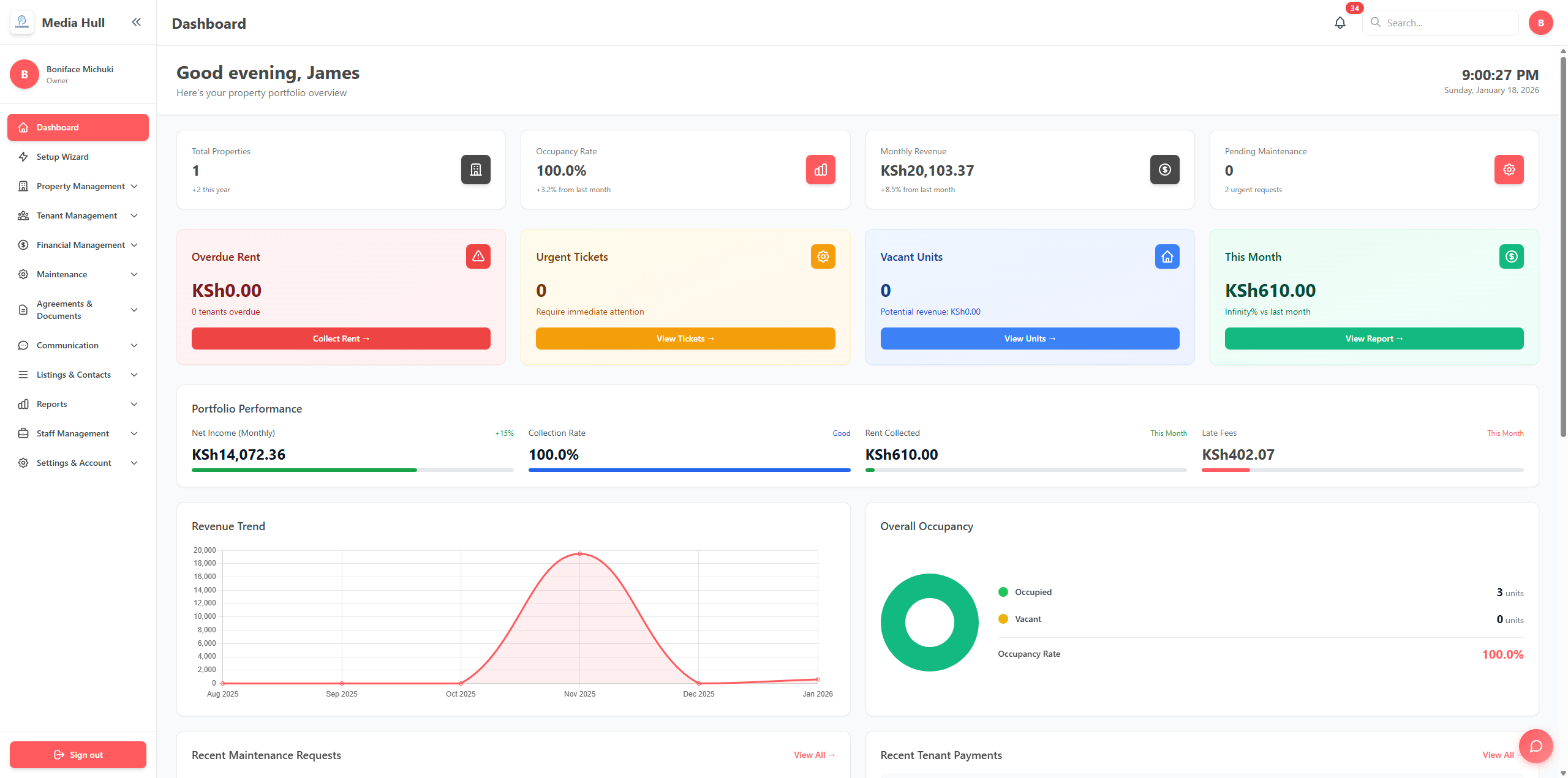
Every transaction must be recorded with:
- Date
- Amount
- Category (from chart of accounts)
- Property/Unit (if multiple)
- Description
- Payment method (M-Pesa, bank, cash)
- Receipt/Reference number
Sample transaction log:
| Date | Property | Category | Description | Amount | Method | Ref |
|---|---|---|---|---|---|---|
| Oct 1 | Kilimani Apt | Rental Income | Unit 3A Oct Rent | 35,000 | M-Pesa | RXX123 |
| Oct 3 | Kilimani Apt | Maintenance | Plumber - Unit 2B | -3,500 | Cash | - |
| Oct 5 | Kilimani Apt | Utilities | KPLC Bill Sept | -12,400 | Bank | INV890 |
Step 4: Monthly Reconciliation Process
Bank Reconciliation (monthly):
- Get bank statement
- Match all transactions in your records
- Identify discrepancies
- Add missing transactions
- Correct errors
- Verify ending balance matches
M-Pesa Reconciliation:
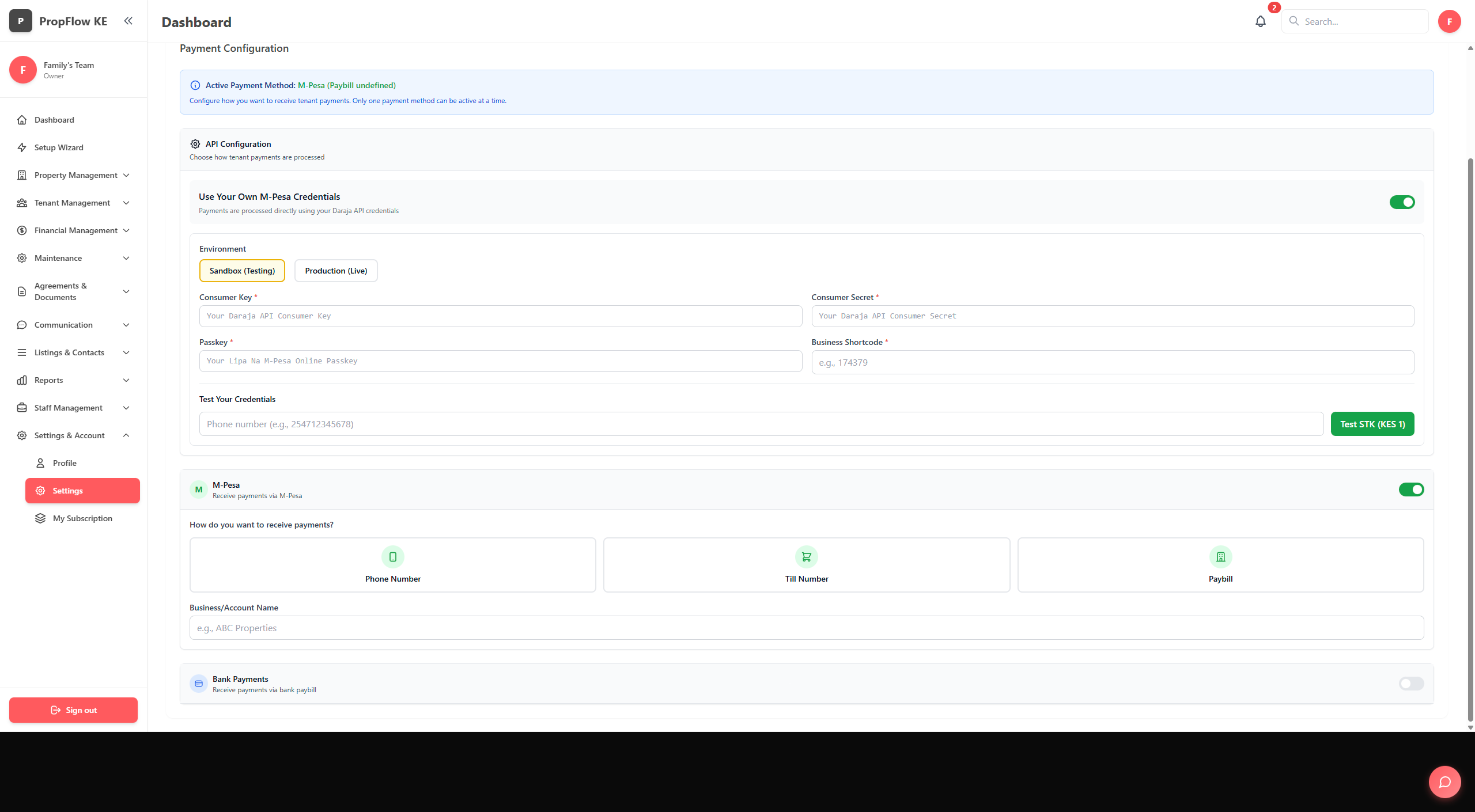
- Download M-Pesa statement
- Match all rent payments to tenants
- Verify amounts and dates
- Flag unmatched transactions
- Follow up on discrepancies
With proper M-Pesa integration, most payments are matched automatically.
Tracking Key Performance Indicators (KPIs)
Essential Property Metrics to Monitor
1. Net Operating Income (NOI)
Formula: Total Income - Operating Expenses
Example:
- Rental Income: KES 500,000
- Operating Expenses: KES 200,000
- NOI: KES 300,000
What it shows: Property's earning power before financing
2. Cash-on-Cash Return
Formula: (Annual Cash Flow / Total Cash Invested) x 100
Example:
- Annual Cash Flow: KES 600,000
- Cash Invested: KES 3,000,000
- Cash-on-Cash Return: 20%
Benchmark: 8-12% is good in Kenya
3. Capitalization Rate (Cap Rate)
Formula: (Annual NOI / Property Value) x 100
Example:
- Annual NOI: KES 1,200,000
- Property Value: KES 10,000,000
- Cap Rate: 12%
Benchmark: 10-15% typical for Nairobi
4. Occupancy Rate
Formula: (Occupied Units / Total Units) x 100
Target: 95%+ occupancy
5. Operating Expense Ratio
Formula: (Operating Expenses / Gross Income) x 100
Example:
- Operating Expenses: KES 200,000
- Gross Income: KES 500,000
- Expense Ratio: 40%
Benchmark: 35-50% typical
6. Debt Service Coverage Ratio (DSCR)
Formula: NOI / Annual Debt Payments
Example:
- NOI: KES 1,200,000
- Annual Loan Payments: KES 800,000
- DSCR: 1.5
Requirement: Banks want 1.25+ for loans
Tax Compliance for Kenyan Landlords
Understanding Your Tax Obligations
1. Rental Income Tax
Rate: Progressive rates up to 30%
Taxable Income Calculation:
Gross Rental Income           KES 600,000
Less: Allowable Deductions   (KES 240,000)
------------------------------------------
Taxable Income                KES 360,000

Tax Calculation:
First KES 288,000 @ 10%       KES  28,800
Next KES  72,000 @ 25%        KES  18,000
------------------------------------------
Total Tax Due                 KES  46,800
2. Allowable Tax Deductions
What you CAN deduct:
- Mortgage interest (not principal)
- Repairs and maintenance
- Property management fees
- Insurance premiums
- Property taxes and rates
- Utilities (if landlord pays)
- Cleaning and security
- Legal and professional fees
- Advertising costs
- Depreciation (4% per year)
- Bank charges and fees
- Software and tools
What you CANNOT deduct:
- Mortgage principal payments
- Property improvements (capitalize instead)
- Personal expenses
- Fines and penalties
- Owner's salary/draw
3. Residential Rental Income (RRI) Tax
Who it applies to: Landlords earning under KES 15M annually
Rate: 10% of gross rent (simplified tax)
How it works:
- Flat 10% on gross rental income
- No deductions allowed
- Simpler filing process
- May be more or less than standard rate
Example comparison:
Standard Tax:
- Gross Rent: KES 1,200,000
- Deductions: KES 480,000
- Taxable: KES 720,000
- Tax @30%: KES 144,000
RRI Tax:
- Gross Rent: KES 1,200,000
- Tax @10%: KES 120,000
Savings with RRI: KES 24,000
Note: Cannot switch mid-year, choose at start of tax year.
4. VAT on Commercial Property
When it applies:
- Commercial property rental
- Gross turnover over KES 5M
Rate: 16% on rent
Example:
- Monthly Rent: KES 100,000
- VAT @16%: KES 16,000
- Total Invoice: KES 116,000
5. Withholding Tax
Rate: 10% on rent above KES 30,000/month
Who deducts: Tenant (if corporate) or agent
What to do:
- Issue invoice
- Tenant withholds 10%
- Obtain withholding certificate
- Offset against income tax
Monthly Financial Management Checklist
Week 1: Collection & Recording
Day 1-7:
- Send rent reminders
- Receive M-Pesa payments
- Issue receipts
- Record all income
- Update tenant ledgers
- Follow up on late payments
Week 2: Expenses & Payments
Day 8-14:
- Pay monthly bills (utilities, security)
- Process vendor invoices
- Pay fundis for repairs
- Record all expenses
- File receipts/invoices
- Update expense categories
Week 3: Reconciliation
Day 15-21:
- Reconcile bank accounts
- Reconcile M-Pesa statements
- Match all transactions
- Investigate discrepancies
- Update records
- Generate draft reports
Week 4: Reporting & Planning
Day 22-30:
- Finalize monthly reports
- Review KPIs and metrics
- Analyze variances
- Plan next month budget
- Make strategic decisions
- Archive documents
Creating Professional Financial Reports
Monthly Report Template
PROPERTY FINANCIAL REPORT
Month: June 2026
Property: Kilimani Apartments

EXECUTIVE SUMMARY
- Total Income: KES 437,000 (up 5% vs Sept)
- Total Expenses: KES 273,000 (down 2% vs Sept)
- Net Profit: KES 164,000
- Profit Margin: 37.5%
- Occupancy Rate: 96% (24/25 units)
- Outstanding Rent: KES 35,000 (2 tenants)

INCOME BREAKDOWN
- Rental Income: KES 420,000 (96%)
- Late Fees: KES 12,000 (3%)
- Other: KES 5,000 (1%)

TOP EXPENSES
1. Mortgage: KES 150,000 (55%)
2. Maintenance: KES 35,000 (13%)
3. Property Management: KES 21,000 (8%)
4. Utilities: KES 18,000 (7%)
5. Security: KES 15,000 (5%)

KEY METRICS
- Cash on Cash Return (YTD): 18.5%
- Operating Expense Ratio: 28.1%
- Debt Service Coverage: 1.45
- Average Rent/Unit: KES 17,500

VARIANCES
- Maintenance up KES 12,000 (plumbing repairs)
- Utilities down KES 3,000 (water leak fixed)

NEXT MONTH PLAN
- Unit 12 renewal due (offer 5% discount)
- Schedule annual property inspection
- Budget KES 50,000 for exterior painting

ATTACHMENTS
- Detailed Income Statement
- Cash Flow Statement
- Tenant Payment Status
- Expense Details by Category
Common Financial Mistakes Landlords Make
Mistake 1: Mixing Personal and Business Finances
Problem:
- Using same bank account
- Paying personal bills from rental income
- No clear separation
Solution:
- Separate bank account for each property
- Pay yourself a set "salary"
- Keep business expenses separate
Mistake 2: Not Tracking Small Expenses
Reality: KES 500 here, KES 1,000 there = KES 50,000+ annually
Track everything:
- Hardware store purchases
- Cleaning supplies
- Transport to property
- Small repairs
- Phone calls
Tax deduction lost: KES 15,000/year by not tracking small expenses
Mistake 3: Missing Depreciation Deduction
What is it: Annual 4% property value deduction
Example:
- Property Value: KES 8,000,000
- Annual Depreciation: KES 320,000
- Tax Savings @30%: KES 96,000
Most landlords miss this!
Mistake 4: No Emergency Reserve Fund
Problem: Unexpected repairs break cash flow
Solution: 3-6 months expenses in reserve
For KES 200,000 monthly expenses:
- Minimum reserve: KES 600,000
- Ideal reserve: KES 1,200,000
Mistake 5: Forgetting Tenant Deposits are Liabilities
Wrong: Treating deposits as income
Right: Deposits are liability (owed to tenant)
Accounting:
- Receive deposit: Credit "Tenant Deposits Held"
- Return deposit: Debit "Tenant Deposits Held"
- Forfeit deposit: Credit "Other Income"
Property Financial Software vs Manual Tracking
Manual Tracking (Excel)
Pros:
- Free (if you have Excel)
- Full control
- Customizable
Cons:
- Time-consuming (10+ hours/month)
- Error-prone
- No automation
- Hard to scale
- No real-time data
- Poor multi-property support
Property Management Software
Pros:
- Automated M-Pesa tracking
- Real-time financial dashboard
- Automatic report generation
- Multi-property support
- Cloud-based (access anywhere)
- Tax-ready reports
- Audit trail
- Professional appearance
ROI Calculation:
Time saved: 10 hours/month x KES 500/hour = KES 5,000 Better tracking = tax savings: Potentially significant annually Reduced errors: Priceless
How PropFlow Simplifies Property Finances
Automated Financial Management
Income Tracking
- Auto-imports M-Pesa transactions
- Matches payments to tenants
- Generates digital receipts
- Tracks late fees automatically
Expense Management
- Records all expenses
- Categorizes automatically
- Attaches receipt photos
- Tracks by property/unit
Real-Time Reporting
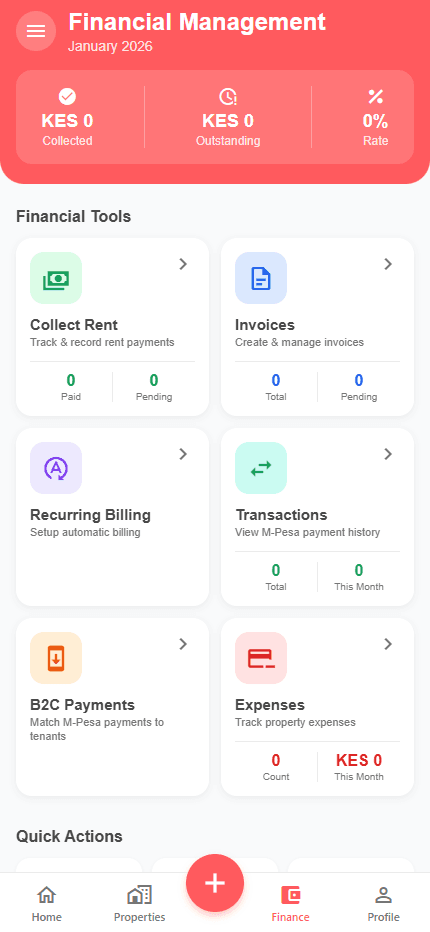
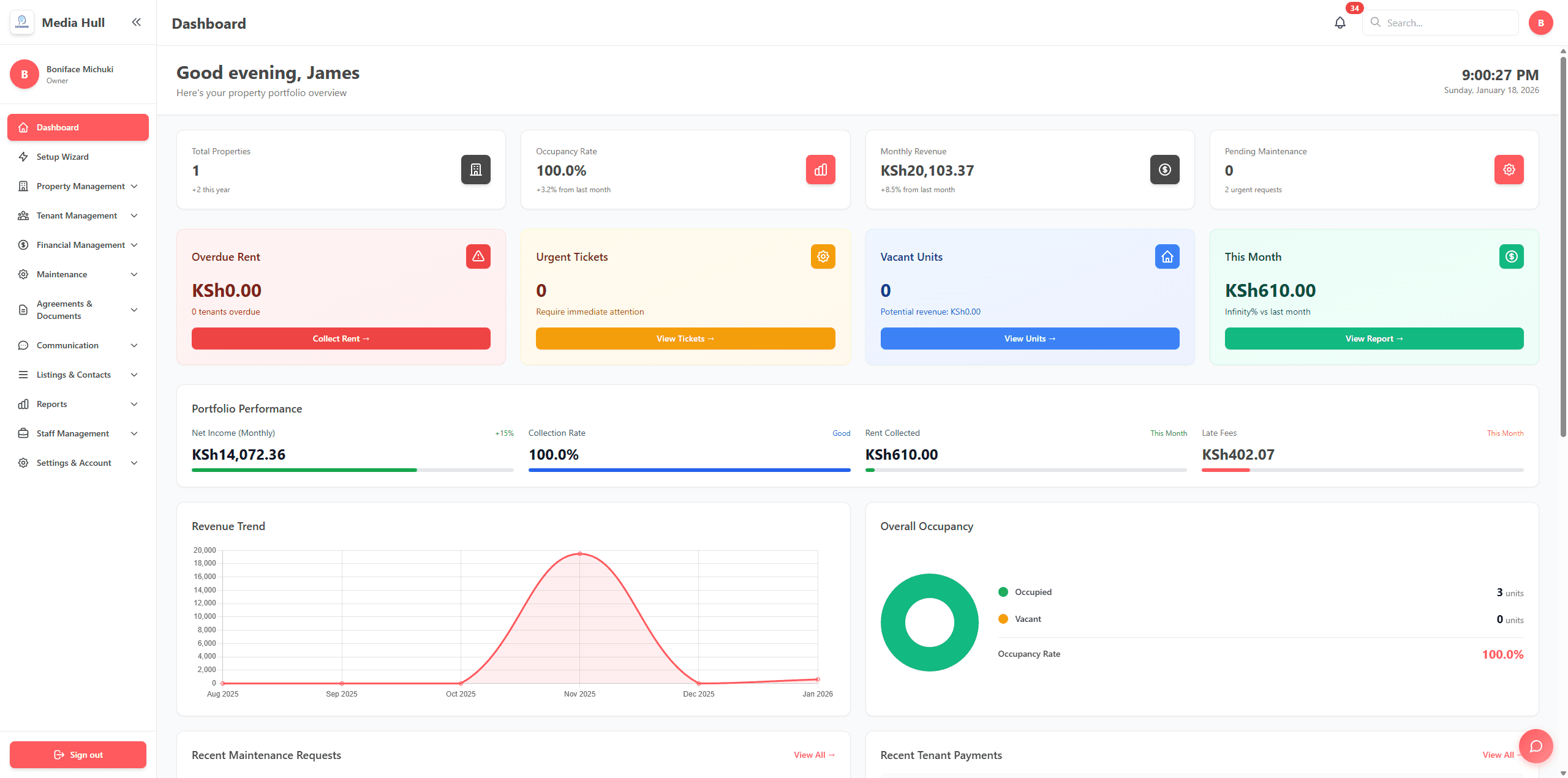
- Live financial dashboard
- Income statement (P&L)
- Cash flow analysis
- Property comparison
- Trend analysis
- Custom date ranges
Tax Preparation
- Organized by tax categories
- Depreciation calculator
- KRA-compliant reports
- Rental income statement
- Deduction summary
- Export to accountant
Multi-Property Support
- Consolidated view
- Property-by-property breakdown
- Portfolio performance
- Comparative analysis
Getting Started: Your 30-Day Financial Setup Plan
Week 1: Foundation
Day 1-2:
- Open separate bank account for property
- Set up M-Pesa business number
- Organize existing financial records
Day 3-4:
- Create chart of accounts
- Choose accounting method
- Select software/system
Day 5-7:
- Enter opening balances
- Record current month transactions
- Set up tenant ledgers
Week 2: Systems
Day 8-10:
- Implement daily recording process
- Create expense filing system
- Set up digital receipt storage
Day 11-14:
- Connect M-Pesa to software
- Link bank account (if possible)
- Test transaction flow
Week 3: Reporting
Day 15-17:
- Generate first income statement
- Create cash flow report
- Build balance sheet
Day 18-21:
- Calculate key metrics
- Set financial goals
- Create budget template
Week 4: Optimization
Day 22-24:
- Review and refine system
- Train staff (if applicable)
- Create documentation
Day 25-28:
- Generate monthly report
- Analyze findings
- Make improvements
Day 29-30:
- Plan next month
- Set up recurring reminders
- Celebrate success!
Final Thoughts: Financial Clarity = Better Decisions
The difference between struggling landlords and thriving property investors isn't usually the properties themselves—it's the financial management.
With proper financial reporting you can:
- Know exactly how profitable you are
- Make data-driven investment decisions
- Maximize legal tax deductions
- Secure bank financing easily
- Identify problems early
- Plan for growth confidently
- Reduce stress during tax season
Without it:
- Flying blind financially
- Overpaying (or underpaying) KRA
- Missing expansion opportunities
- Unable to get loans
- Making emotional decisions
- Constant financial stress
Start Your Financial Transformation Today
PropFlow provides everything you need for professional property financial management:
- Automated M-Pesa income tracking
- Expense management with receipt storage
- Real-time financial dashboard
- One-click financial reports
- Tax-ready documentation
- Multi-property consolidation
- KPI tracking and analytics
Pricing:
| Plan | Price | Properties |
|---|---|---|
| Starter | KES 2,999/month | Up to 3 |
| Professional | KES 7,999/month | Up to 10 |
| Enterprise | KES 19,999/month | Unlimited |
Setup: Under 10 minutes Free Trial: 2 months, no credit card required
About PropFlow
PropFlow is a property management platform built specifically for Kenyan landlords. We combine M-Pesa integration with comprehensive financial management tools to give you complete visibility into your property business.
Website: propflow.ke WhatsApp: 0701 822 032 Email: hello@propflow.ke
Related Articles:
- Automated Property Management in Kenya: 2026 Landlord Guide
- M-Pesa Rent Collection: Complete Guide for Kenyan Landlords
- Tenant Management Best Practices for Kenyan Landlords
Share this guide with landlords who want better financial control and lower taxes.
Get Free Landlord Tips in Your Inbox
Join 500+ Kenyan property owners. Get M-Pesa collection tips, tenant management guides, and PropFlow updates every 2 weeks.
No spam. Unsubscribe anytime. We respect your inbox.
Related Articles
Keep reading

Best Property Management Software in Kenya for Landlords in 2026
A detailed 2026 guide to choosing property management software in Kenya, covering M-Pesa rent collection, tenant records, maintenance, reports, KRA-ready records, and PropFlow.

How Much Kenyan Landlords Actually Lose to Late Rent (and 5 Ways to Fix It)
The real KES cost of late rent in Kenya, with a 12-unit Nairobi example and 5 fixes that drop late-payment rates from 20% to under 4%.
Spreadsheets vs. Property Management Software in Kenya: A KES Cost Breakdown (2026)
A shilling-denominated comparison of running rentals on Excel vs. a proper property management system. Includes a 10-unit case study.