
Tenant Management Best Practices for Kenyan Landlords (2026 Guide)
Practical 2026 tenant management strategies for Kenyan landlords: screening, communication, rent reminders, maintenance response, and retention.
Key Takeaways
- Introduction: Why Great Tenant Management Matters
- The True Cost of Poor Tenant Management
- The 10 Pillars of Excellent Tenant Management
- Tenant Retention Strategies That Actually Work
Published: November 30, 2024 Updated: July 3, 2026 Reading Time: 12 minutes Keywords: Tenant management Kenya, landlord best practices, tenant retention, property management Kenya, reduce turnover
Introduction: Why Great Tenant Management Matters
Here's a fact most Kenyan landlords learn the hard way: Finding good tenants is 10x harder than keeping them.
Yet across Nairobi, Mombasa, and Kisumu, landlords lose quality tenants every month due to preventable issues:
- Poor communication
- Slow maintenance responses
- Unclear policies
- Payment disputes
- Lack of professionalism
The cost? Empty units averaging 2-3 months to refill, plus KES 50,000-200,000+ in lost rent, cleaning, and marketing costs per vacancy.
This 2026 guide shows practical tenant management strategies Kenyan landlords can use to improve screening, communication, rent follow-up, maintenance response, and retention.
2026 refresh note: This article was updated to emphasize operational workflows, tenant communication, and property management system records rather than generic landlord advice.
The True Cost of Poor Tenant Management
Enjoying this article? Get more like it.
Free landlord tips + M-Pesa rent collection guides, every 2 weeks.
What Bad Tenant Management Costs You
Scenario: A 30-unit property in Kilimani
- Average rent: KES 35,000/month
- Turnover rate: 40% annually (12 units)
- Vacancy period: 2.5 months average
Annual cost breakdown:
- Lost rent (vacancy): KES 1,050,000
- Cleaning/repairs per unit: KES 180,000
- Marketing/showing costs: KES 60,000
- Tenant screening costs: KES 48,000
- Total annual cost: KES 1,338,000
With good tenant management (10% turnover):
- Lost rent: KES 262,500
- Other costs: KES 72,000
- Total: KES 334,500
Savings: Over KES 1,000,000 annually
That's the power of tenant retention.
The 10 Pillars of Excellent Tenant Management
1. Professional Tenant Screening (Before Move-In)
Why it matters: The wrong tenant causes 80% of landlord headaches.
Essential screening steps:
Employment Verification
- Request employment letter or payslips (last 3 months)
- Verify income is 3x the rent amount
- Contact employer to confirm (with tenant permission)
Reference Checks
- Previous landlord (most important!)
- Employer reference
- Personal reference (non-family)
ID & Background Verification
- Copy of National ID or Passport
- KRA PIN confirmation
- Credit reference (if available)
Rental History Review
- Payment track record
- Maintenance issues
- Reason for moving
- Notice period given
Red flags to watch:
- Reluctance to provide references
- Multiple recent moves (3+ in 2 years)
- Inconsistent employment history
- Unwilling to sign proper lease
- Offers to pay 6+ months upfront (possible subletting)
2. Crystal-Clear Lease Agreements
Why it matters: Unclear agreements cause 60% of landlord-tenant disputes.
Must-have lease clauses:
Payment Terms
- Rent amount and due date
- Accepted payment methods (M-Pesa, bank transfer)
- Late payment penalties (e.g., 5% after 5 days)
- Deposit amount and refund conditions
Property Rules
- Occupancy limits (who can live there)
- Pet policy
- Noise restrictions
- Subletting policy (usually prohibited)
- Common area usage
Maintenance Responsibilities
- Landlord responsibilities (structural, major repairs)
- Tenant responsibilities (light bulbs, drain unblocking)
- Reporting procedure for issues
- Emergency contacts
Termination Terms
- Notice period (typically 30-60 days)
- Early termination penalties
- Renewal process
- Move-out inspection procedure
Pro tip: Use digital lease agreements with e-signatures for faster processing and better record-keeping.
3. Seamless Move-In Process
The first impression sets the tone for the entire tenancy.
Perfect move-in checklist:
1 Week Before Move-In:
- Complete all repairs and cleaning
- Test all utilities (water, electricity, gas)
- Prepare move-in inspection checklist
- Organize keys and access cards
Move-In Day:
- Conduct detailed unit inspection together
- Document existing damage with photos/video
- Explain all appliances and systems
- Provide tenant welcome package
- Review emergency procedures
- Exchange contact information
- Sign all documents
- Collect deposit and first rent
Welcome Package Should Include:
- Copy of signed lease
- Emergency contacts list
- Waste collection schedule
- Local service contacts (fundis, cleaners)
- Building rules summary
- WiFi details (if provided)
- Neighborhood guide (shops, hospitals, etc.)
4. Proactive Communication Systems
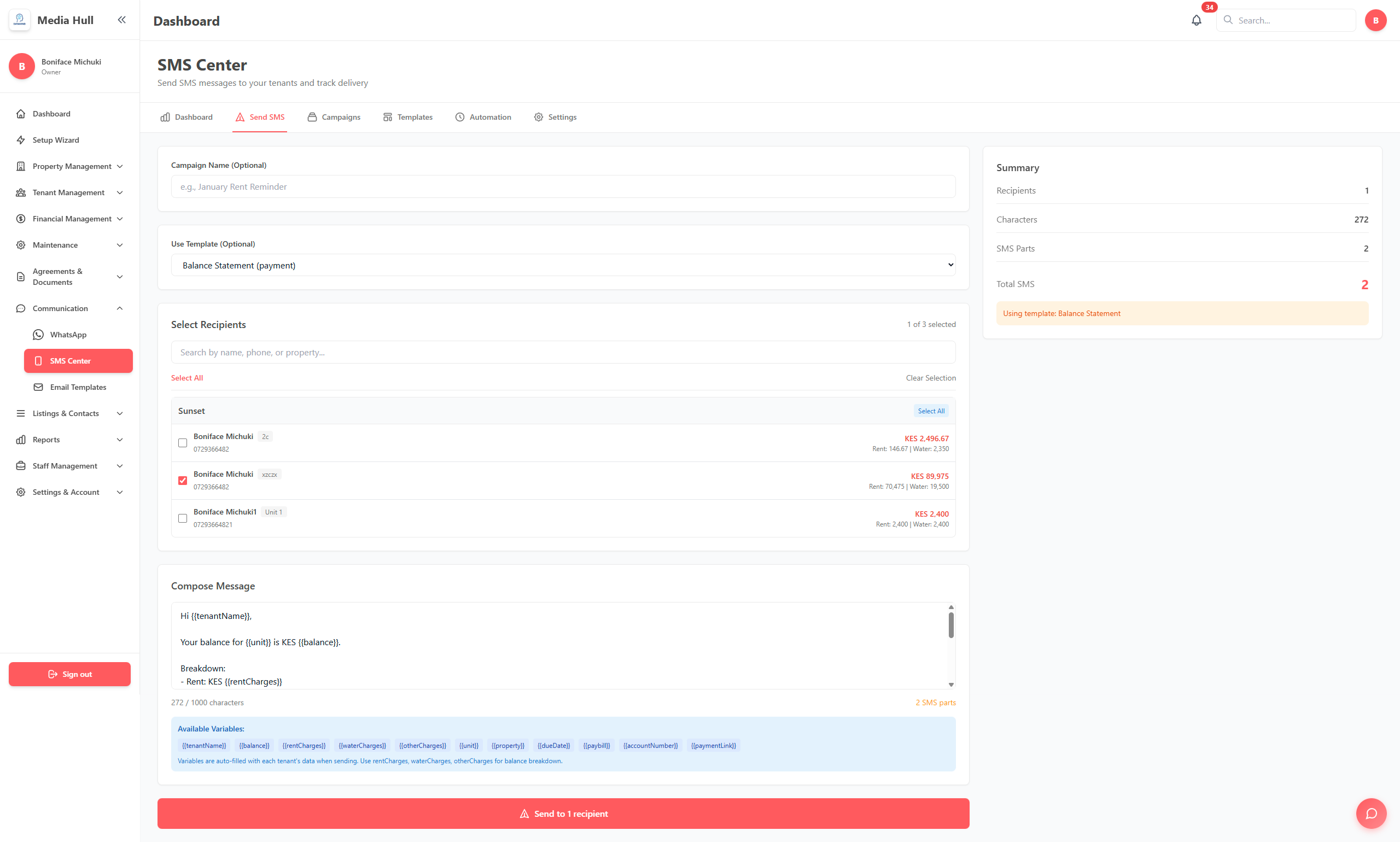
Why it matters: 70% of tenant complaints stem from poor communication.
Communication best practices:
Multiple Channels
- WhatsApp (most popular in Kenya)
- SMS for urgent notices
- Email for formal communications
- Tenant portal for documents
- Emergency phone line
Regular Updates
- Monthly property updates
- Scheduled maintenance notices
- Community improvements
- Payment confirmations
- Important deadline reminders
Response Time Standards
- Emergency issues: 1-2 hours
- Urgent repairs: 24 hours
- General inquiries: 48 hours
- Routine requests: 3-5 business days
Communication template example:
"Dear [Tenant Name],
We're scheduling routine maintenance on [Date]. Our plumber will inspect all units between 9 AM - 4 PM.
Please ensure someone is available or provide access permission.
Questions? Reply to this message or call 0701-XXX-XXX.
Thank you, PropFlow Property Management"
5. Efficient Rent Collection System
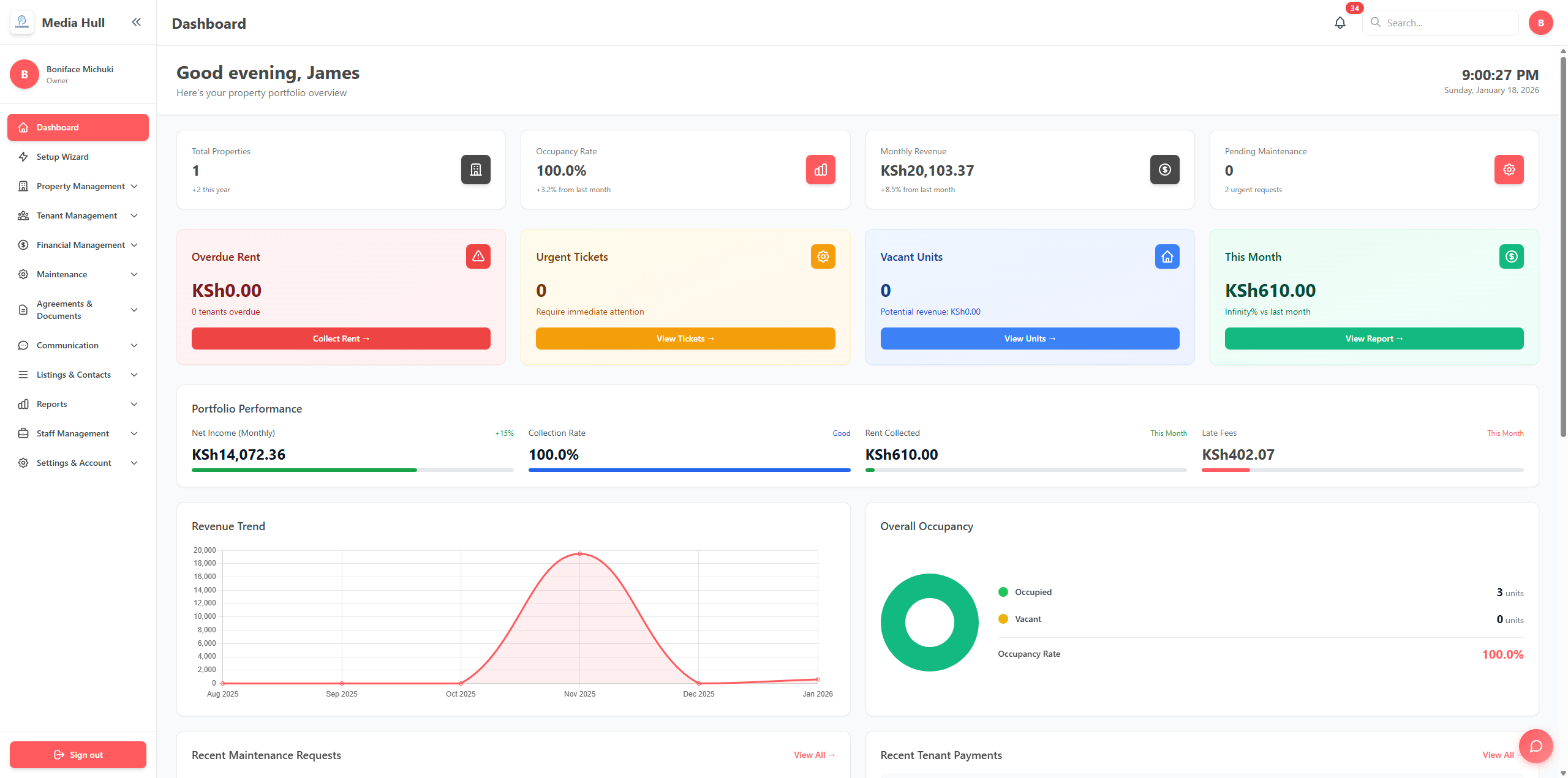
Why it matters: Late rent is the #1 landlord complaint.
Modern rent collection strategy:
Make Payment Easy
- Accept M-Pesa (90% of tenants prefer this)
- Provide multiple payment options
- Use consistent Paybill/Till number
- Send automated payment reminders
- Issue instant digital receipts
Payment Reminder Schedule
- 7 days before: Friendly reminder
- 3 days before: Payment details reminder
- Due date: Payment due notice
- 3 days late: Polite follow-up
- 7 days late: Formal notice
- 14 days late: Penalty notice
Sample reminder message:
"Hi [Name], your rent of KES 35,000 is due on Dec 1st.
Pay to: Paybill 123456, Account: [Unit Number]
You'll receive instant confirmation.
Need payment arrangement? Let's discuss. Reply to this message."
Results with automation:
- Significantly improved on-time payment rates
- Faster collection times
- Fewer late payment disputes
6. Rapid Maintenance Response
Why it matters: Maintenance delays are the #1 reason good tenants leave.
The 24-Hour Maintenance System:
When Issue Reported:
- Acknowledge within 2 hours
- Assess urgency level
- Provide estimated timeline
- Assign to appropriate fundi
- Update tenant on progress
Urgency Levels:
Emergency (1-4 hours)
- Water leaks
- Electrical failures
- Security issues
- Gas leaks
- Sewage backups
Urgent (24 hours)
- No hot water
- AC/heating failure
- Appliance breakdown
- Pest issues
Routine (3-5 days)
- Minor repairs
- Paint touch-ups
- Non-essential fixes
Maintenance best practices:
- Keep list of reliable fundis
- Get 2-3 quotes for major work
- Schedule preventive maintenance
- Document all repairs with photos
- Track repair costs by unit
- Follow up after completion
7. Fair and Transparent Policies
Why it matters: Tenants stay where they feel treated fairly.
Essential fair policies:
Consistent Application
- Apply rules equally to all tenants
- No favoritism or discrimination
- Document all policy decisions
- Communicate changes clearly
Reasonable Rent Increases
- Give 60-90 days notice
- Limit to inflation rate (5-10% max)
- Explain reasons (taxes, improvements)
- Offer lease renewal incentives
Transparent Deposit Handling
- Itemized deduction list
- Photos of any damage
- Return within 14-30 days
- Clear refund process
Flexible Payment Plans
- Consider hardship cases
- Offer payment arrangements
- Waive late fees for first-time issues
- Maintain documentation
Sample rent increase notice:
"Dear Valued Tenant,
Due to increased property taxes and maintenance costs, rent will adjust from KES 30,000 to KES 32,500 (8.3% increase) effective March 1, 2026.
This is our first increase in 2 years and below the market rate of 12%.
Renew your lease by Jan 15th and get the first month at current rate.
Questions? Let's discuss. We value having you as our tenant."
8. Build Tenant Community
Why it matters: Tenants who feel part of a community stay longer.
Community-building strategies:
Organize Events
- Annual tenant appreciation BBQ
- Holiday celebrations
- Kids' events (if family property)
- Cleaning days with incentives
Communication Channels
- WhatsApp group for announcements
- Notice board for community info
- Newsletter (monthly or quarterly)
- Suggestion box for feedback
Appreciation Gestures
- Birthday wishes
- Holiday greetings
- Long-term tenant rewards
- Referral bonuses
- Maintenance day refreshments
Handle Conflicts Professionally
- Mediate neighbor disputes quickly
- Establish clear complaint process
- Enforce rules consistently
- Address issues privately
9. Regular Property Inspections
Why it matters: Catch problems early, protect your investment.
Inspection schedule:
Quarterly Inspections
- External areas (quarterly)
- Common areas (monthly)
- Individual units (semi-annually with notice)
What to inspect:
- Property damage
- Unauthorized occupants
- Cleanliness standards
- Safety hazards
- Needed repairs
- Lease compliance
Inspection best practices:
- Give 24-48 hours written notice
- Use detailed checklist
- Take photos for records
- Discuss issues immediately
- Follow up in writing
- Schedule repairs promptly
Sample inspection notice:
"Routine property inspection scheduled for [Date] between 10 AM - 2 PM.
We'll check smoke detectors, plumbing, and general maintenance needs.
Please ensure access or let us know a better time.
Thanks for your cooperation!"
10. Technology-Enabled Management
Why it matters: Modern tenants expect digital convenience.
Essential tech tools:
Tenant Portal
- Pay rent via M-Pesa
- Submit maintenance requests
- Access documents anytime
- View payment history
- Receive announcements
- Contact landlord directly
Landlord Dashboard
- Track all payments real-time
- Monitor maintenance status
- Store tenant documents
- Generate financial reports
- Send bulk communications
- Manage multiple properties
Automation Benefits
- Significant reduction in admin time
- Faster rent collection
- Better maintenance tracking
- Improved communication
- Complete audit trail
- Professional image
Tenant Retention Strategies That Actually Work
Strategy 1: The 60-Day Pre-Renewal Campaign
Timeline:
60 Days Before Lease End:
- Send renewal reminder
- Ask about satisfaction
- Address any concerns
45 Days:
- Present renewal offer
- Highlight improvements made
- Offer renewal incentive (e.g., free deep cleaning)
30 Days:
- Follow up on decision
- Negotiate if needed
- Finalize new lease
Renewal incentive ideas:
- First month discount (2-5%)
- Free painting or upgrades
- Extended lease at current rate
- Waived processing fees
- Home warranty inclusion
Strategy 2: The Welcome-Back Program
For tenants who left but want to return:
- Waive application fees
- Fast-track approval
- Priority unit selection
- Returning tenant discount
Why it works: Former good tenants already know the property and neighborhood.
Strategy 3: The Referral Reward System
Offer current tenants:
- KES 5,000-10,000 for successful referral
- One month rent discount
- Free upgrade or amenity
Requirements:
- Referred tenant passes screening
- Completes 3-6 months tenancy
- Pays rent on time
ROI: KES 10,000 referral bonus vs. KES 50,000+ vacancy cost
Handling Difficult Situations
Dealing with Late Payments
Approach:
- Understand the reason (job loss, medical emergency)
- Assess payment history (first time vs. chronic)
- Offer solutions:
- Payment plan (spread over 2-3 months)
- Partial payment with timeline
- Temporary discount
- Document everything in writing
- Set clear deadlines and consequences
Sample conversation:
"I understand you're facing challenges. You've been a great tenant for 2 years.
Let's work out a payment plan: KES 15,000 now + KES 20,000 by the 15th.
Can you commit to this? I want to help you stay."
Managing Noise Complaints
Steps:
- Document the complaint (date, time, nature)
- Verify the issue (multiple complaints, specific times)
- Contact the tenant (private conversation first)
- Issue warning (written notice if continues)
- Enforce lease terms (fines or eviction if severe)
Prevention:
- Include noise policy in lease
- Set quiet hours (10 PM - 7 AM)
- Install soundproofing if needed
- Address immediately to prevent escalation
Handling Maintenance Disputes
Common disputes:
- Who pays for repairs?
- Timeline too slow
- Quality of work
Resolution approach:
- Review lease terms clearly
- Provide evidence (photos, quotes)
- Explain decisions transparently
- Offer compromise if appropriate
- Document resolution
Prevention:
- Crystal-clear lease maintenance clause
- Regular preventive maintenance
- Fast response times
- Quality fundis
- Proper documentation
The PropFlow Tenant Management System
How Technology Transforms Tenant Management
Traditional approach problems:
- Manual rent tracking
- Missed maintenance requests
- Poor communication
- Lost documents
- Time-consuming admin
PropFlow solution:
Automated Rent Collection
- M-Pesa integration
- Auto-reminders
- Instant receipts
- Payment tracking
Maintenance Management
- Tenant submits with photos
- Auto-assign to fundis
- Track progress
- Completion confirmation
Communication Hub
- Bulk WhatsApp/SMS
- Targeted announcements
- Document sharing
- Emergency alerts
Document Management
- Digital lease agreements
- Tenant files organized
- Payment history
- Inspection reports
Analytics & Reports
- Occupancy rates
- Payment trends
- Maintenance costs
- Tenant satisfaction
Try PropFlow Free for 2 Months
Your 90-Day Tenant Management Improvement Plan
Month 1: Foundation
Week 1-2:
- Review all current leases
- Update lease template
- Create tenant database
- Document all policies
Week 3-4:
- Implement M-Pesa rent collection
- Set up communication system
- Create maintenance tracking
- Organize tenant documents
Month 2: Systems
Week 5-6:
- Train staff on new systems
- Send policy updates to tenants
- Launch tenant portal
- Implement inspection schedule
Week 7-8:
- Start automated reminders
- Test maintenance workflow
- Gather tenant feedback
- Address system issues
Month 3: Optimization
Week 9-10:
- Analyze payment data
- Review maintenance response times
- Assess tenant satisfaction
- Identify improvement areas
Week 11-12:
- Launch retention campaign
- Implement referral program
- Plan tenant appreciation event
- Measure results vs. baseline
Expected results after 90 days:
- Faster rent collection
- Fewer maintenance complaints
- Improvement in retention
- Less administrative time
Measuring Tenant Management Success
Key Metrics to Track
Retention Rate
- Target: 80%+ annual retention
- Calculate: (Tenants staying / Total tenants) x 100
Average Tenancy Length
- Target: 2+ years
- Industry average: 14-18 months
On-Time Payment Rate
- Target: 95%+
- Track monthly trends
Maintenance Response Time
- Target: 24 hours for urgent issues
- Measure: Request to completion
Vacancy Rate
- Target: Under 5%
- Calculate: (Empty units / Total units) x 100
Tenant Satisfaction Score
- Conduct quarterly surveys
- Target: 8/10 or higher
- Track improvement over time
Common Tenant Management Mistakes to Avoid
Mistake 1: Skipping Tenant Screening Result: Problem tenants, late payments, property damage
Mistake 2: Verbal Agreements Result: Disputes, no legal protection, he-said-she-said
Mistake 3: Ignoring Small Maintenance Issues Result: Bigger problems, tenant dissatisfaction, costly repairs
Mistake 4: Poor Communication Result: Misunderstandings, tenant turnover, bad reputation
Mistake 5: Inconsistent Policy Application Result: Discrimination claims, tenant resentment, legal issues
Mistake 6: Neglecting Good Tenants Result: They leave for competitors who appreciate them
Mistake 7: Reactive vs. Proactive Management Result: Constant firefighting, stressed landlord, poor results
Final Thoughts: Tenant Management is Relationship Management
The most successful Kenyan landlords understand a fundamental truth:
Tenants are not just occupants - they're customers.
And like any business, customer retention is cheaper and more profitable than constant customer acquisition.
The ROI of excellent tenant management:
- High retention = fewer vacancies
- Faster rent collection = Better cash flow
- Happy tenants = Better property care
- Good reputation = Easier unit rentals
- Less stress = More time for growth
The choice is yours:
Continue with outdated, stressful, manual tenant management...
Or embrace modern systems that automate admin work while you focus on relationships and growth.
Start Managing Tenants Like a Pro Today
PropFlow gives you all the tools successful Kenyan landlords use:
- Automated rent collection with M-Pesa
- Digital tenant portal
- Maintenance tracking system
- Communication automation
- Document management
- Financial reporting
- Mobile apps for you and tenants
Pricing:
| Plan | Price | Properties |
|---|---|---|
| Starter | KES 2,999/month | Up to 3 |
| Professional | KES 7,999/month | Up to 10 |
| Enterprise | KES 19,999/month | Unlimited |
Setup time: Under 10 minutes Support: WhatsApp, phone, email (English & Swahili) Free trial: 2 months, no credit card required
About PropFlow
PropFlow is a property management platform built specifically for Kenyan landlords. We combine M-Pesa integration with comprehensive property management tools to make landlording easier.
Get Started: propflow.ke WhatsApp: 0701 822 032 Email: hello@propflow.ke
Related Articles:
- Automated Property Management in Kenya: 2026 Landlord Guide
- M-Pesa Rent Collection: The Complete Guide for Kenyan Landlords
- Complete Guide to Property Management Accounting in Kenya
Share this guide with fellow landlords who want to improve tenant retention and reduce vacancies.
Get Free Landlord Tips in Your Inbox
Join 500+ Kenyan property owners. Get M-Pesa collection tips, tenant management guides, and PropFlow updates every 2 weeks.
No spam. Unsubscribe anytime. We respect your inbox.
Related Articles
Keep reading

How to Screen Tenants in Kenya: A Landlord's Complete Guide (2026)
Protect your property with a proven tenant screening process covering KYC, credit checks, references, and red flags.

Best Property Management Software in Kenya for Landlords in 2026
A detailed 2026 guide to choosing property management software in Kenya, covering M-Pesa rent collection, tenant records, maintenance, reports, KRA-ready records, and PropFlow.

How Much Kenyan Landlords Actually Lose to Late Rent (and 5 Ways to Fix It)
The real KES cost of late rent in Kenya, with a 12-unit Nairobi example and 5 fixes that drop late-payment rates from 20% to under 4%.